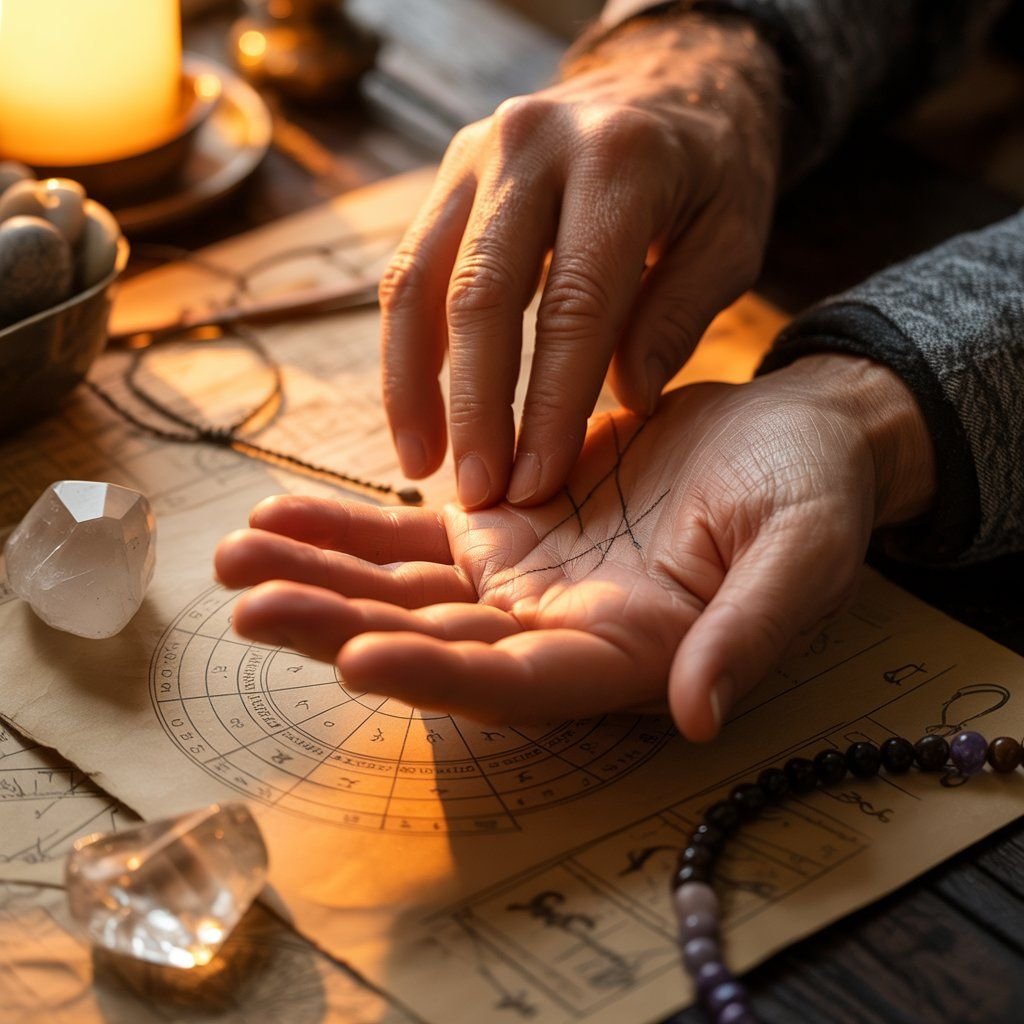
Ever caught yourself staring at your palms during a dull meeting? Those lines aren’t random. They’re a map—and you’ve been carrying it your entire life. Palmistry isn’t some carnival trick or Bollywood drama device. It’s an ancient science practiced for over 5,000 years across India, China, and Egypt. Your hands hold patterns that reveal personality traits, health indicators, and yes, even glimpses of what’s ahead. Think of it as your personal user manual. Written in lines, mounts, and shapes you see every day but never really notice.
Why Palmistry Still Matters in Modern India
We swipe, tap, and type constantly. Yet our hands reveal more than our screen time suggests. Palmistry reading has seen a revival among young professionals and entrepreneurs. Why? Because unlike personality tests that take an hour, your palm tells the story in minutes. No questionnaires, no algorithm—just you and your hands. The practice fits perfectly with India’s tech-savvy spirituality. You want insights backed by centuries of observation, not generic horoscopes. Palmistry delivers that specificity. Plus, searching “palmistry near me” has tripled in the last five years. People want real readings from experts who understand the nuances, not apps with generic interpretations.
The Three Major Lines Everyone Should Know
Let’s start with the basics. Three primary palmistry lines dominate your palm: the heart line, head line, and life line. The Heart Line: This curves across the top of your palm, just below your fingers. It’s about emotions, relationships, and how you love. A deep, unbroken heart line? You’re emotionally stable and committed. Short and faint? You might be more reserved, less sentimental. If it ends under your index finger, you’re idealistic about love. Under your middle finger? You’re more practical.
The Head Line: Running across your palm's center, this line reveals how you think and make decisions.
A straight head line indicates logical, analytical thinking. Curved? You’re creative and spontaneous. Deep and long? Strong focus and good memory. Multiple breaks? You might experience significant mental shifts or major decisions throughout life. The Life Line: This arcs around your thumb’s base. Contrary to myths, it doesn’t predict lifespan—it shows vitality and life quality. A strong, deep life line suggests robust health and energy. Faint? You might tire easily. If it stays close to your thumb, you’re cautious. Wide arc? You’re adventurous and love exploring.
Palmistry for Female vs. Palmistry for Male: Does Gender Matter?
Here’s where tradition meets modern interpretation. Traditionally, palmistry for female readings focused on the right hand (active hand), while palmistry for male readings emphasized the left. But contemporary palmists read both hands regardless of gender. Your dominant hand shows your present and future—the person you’re becoming. Your non-dominant hand reveals potential and inherited traits—what you were born with.
The real differences appear in interpretation context, not the lines themselves:
Aspect Traditional View Modern Approach Reading Hand Gender-specific Both hands, dominant emphasized Career Lines Different priorities Equal career focus Relationship Lines Marriage-focused Partnership & self-fulfillment Success Markers Gender-stereotyped Individual definition of success Health Indicators Same methodology Same methodology. Today’s palmistry respects that ambition, creativity, and relationships matter equally to everyone. Your lines reflect your unique journey, not stereotypical gender roles.
The Secret Language of Minor Lines
Beyond the big three, your palm contains dozens of smaller palmistry lines. Each adds detail to your story.
The Fate Line:
Runs vertically up your palm’s center. A clear fate line suggests strong direction and purpose. Missing entirely? You create your own path without predetermined direction—which isn’t bad, just different.
The Sun Line:
Parallel to the fate line, this indicates success, creativity, and public recognition. Artists, performers, and entrepreneurs often have prominent sun lines.
The Mercury Line:
Starts at the wrist and moves toward your pinky. It reveals communication skills and business acumen. Tech founders and sales pros usually have strong mercury lines.
Marriage Lines:
Those small horizontal lines under your pinky finger. They indicate significant relationships—not necessarily legal marriages. Deep and long? Committed partnerships. Multiple lines? You experience several important relationships.
Travel Lines:
Found on the edge of your palm opposite your thumb. These suggest significant journeys that change your perspective. In today’s global India, almost everyone has a few.
What Palm Mounts Reveal About Your Character
Mounts are the fleshy pads beneath each finger. They’re named after planets and reveal different personality facets.
Mount of Jupiter (under index finger):
Leadership, ambition, confidence. Well-developed? You’re born to lead and inspire.
Mount of Saturn (under middle finger):
Wisdom, responsibility, introspection. Prominent? You’re thoughtful and serious about commitments.
Mount of Apollo (under ring finger):
Creativity, charisma, artistic talent. High mount? You shine in creative or public-facing roles.
Mount of Mercury (under pinky):
Communication, business sense, wit. Developed mount? You’re persuasive and quick-thinking.
Mount of Venus (thumb base):
Love, passion, vitality. Large and firm? You’re warm, affectionate, and energetic.
Mount of Venus (thumb base):
Love, passion, vitality. Large and firm? You’re warm, affectionate, and energetic.
Press each mount gently. The firmest ones dominate your personality. Flat or soft? That trait takes a back seat in your life.
Learning Palmistry: Books and Resources
Want to read your own palms? Start with the right palmistry book. “The Complete Guide to Palmistry” by Johnny Fincham offers clear illustrations and practical exercises. For India-specific traditions, look for texts incorporating Vedic samudrika shastra—the ancient Indian science of body features. But here’s the honest truth: Books teach theory. Real skill comes from reading hundreds of actual palms. Start with friends and family. Compare what you see with what you know about them. Notice patterns. Does every entrepreneur you meet have a strong mercury line? Do creative friends share similar head line curves? These observations build expertise faster than any palmistry book alone.
The Sonartori Gems & Gold Factor
Palmistry often leads to gemstone recommendations. Weak venus mount? An emerald might boost vitality. Unclear fate line? Blue sapphire could provide direction. This is where trusted sources like Sonartori Gems & Gold become important. Not all gemstones are created equal. Quality, cut, and authenticity matter—especially when you’re wearing them for astrological purposes. But don’t rush into purchases. Get your palm read by an expert first. Understand what your hands actually say before investing in remedies. The right gemstone complements your natural strengths; it doesn’t create magic from nothing.
Finding Quality Palmistry Near Me
The “palmistry near me” search brings up hundreds of options. How do you separate experts from amateurs?
Look for these signs:
Experience:
Ten-plus years of practice. Palmistry requires reading countless hands to develop accuracy.
Methodology:
They should explain their interpretations, not just declare pronouncements. Good palmists educate while they read.
Reasonable Claims:
Run from anyone promising lottery numbers or exact marriage dates. Palmistry shows tendencies and timing, not specific events.
Client Testimonials:
Real reviews from real people. Be skeptical of generic praise without details.
Continued Learning:
The best palmists study continuously, blending traditional wisdom with modern psychology.
Consider video consultations if you can’t find quality readers locally. Geography matters less than expertise.
Common Myths That Need to Die
Let’s clear up some nonsense.
Myth:
A short life line means early death. Reality: It indicates energy levels and vitality, not lifespan. Plenty of centenarians have short life lines.
Myth:
Palmistry is fortune-telling. Reality: It’s pattern recognition based on thousands of years of observation. Your hands change as you change.
Myth:
Lines are fixed at birth. Reality: Major lines shift subtly over years. Your choices reshape your hands. Check photos from a decade ago—you’ll spot differences.
Myth:
Only gifted psychics can read palms. Reality: Anyone can learn palmistry. It’s study and practice, not supernatural ability.
Myth:
Both hands show the same thing. Reality: Your non-dominant hand shows potential; dominant hand shows reality. The difference reveals how much you’ve grown beyond your initial programming.
Taking Action: Your Next Steps
Ready to explore what your hands reveal? First, photograph both palms in natural light. Compare your major lines to the descriptions here. Notice what resonates with your actual personality and experiences. Second, practice on willing friends. The more hands you examine, the more patterns you’ll recognize. Make it a conversation, not a performance. Third, invest in one solid palmistry book. Read it cover to cover, then reference specific sections as needed. Fourth, consider a professional palmistry reading. A good session provides insights you’ll reference for years. Think of it as a detailed personality assessment written in your skin.
The Bottom Line
Your hands aren’t just tools. They’re records of who you are and who you’re becoming. Palmistry offers a mirror—sometimes flattering, sometimes uncomfortable, always revealing. Unlike social media profiles or resumes, your palms can’t lie. They show your authentic self, unfiltered and unedited. In a country where ancient wisdom meets modern ambition, palmistry bridges the gap beautifully. It respects tradition while remaining relevant to today’s questions: career paths, relationship compatibility, personal strengths. So take a moment. Look at your hands. Really look. Those lines have been with you through every triumph and setback. They’ve adapted as you’ve grown. They’ll continue changing as you do. The question isn’t whether palmistry works. The question is: are you ready to read what you’ve been writing? Want to decode your palm’s secrets? Find an experienced palmistry expert in your city. Bring curiosity and an open mind. Your hands have been waiting to tell their story.